
Where Wedding Traditions Come From
And What They Really Mean Today
If you have ever found yourself wondering why weddings include certain wedding traditions, you are not alone. Many couples start planning their wedding full of excitement, only to feel overwhelmed when they realise how many “rules” and expectations seem to come with it.
From white dresses to having the bride’s father walking them down the aisle, from wedding rings to throwing the bouquet – these wedding traditions are customs that seem deeply ingrained in wedding culture. But where did wedding traditions come from, and do they still have to matter today?
As a Brisbane wedding planner working with modern Australian couples, I am often asked which wedding traditions are “must-dos”, which can be skipped, and how to honour meaning without feeling boxed in. Understanding the origins of wedding traditions can help you make intentional, confident choices that feel right for you.
Let’s explore where some of the most common wedding traditions come from and how they can be reimagined for contemporary weddings.
Why Wedding Traditions Exist in the First Place
Wedding traditions date back hundreds, sometimes thousands, of years. Historically, weddings were not about romance or personal expression. They were often legal, political, or financial arrangements between families.
Many wedding traditions symbolised:
Property exchange
Protection from bad luck or evil spirits
Social status and wealth
Religious or cultural beliefs
Over time, these wedding traditions evolved. Some lost their original meaning, while others took on a renewed emotional significance. Today, weddings are far more personal, but the wedding traditions remain – sometimes without explanation.
Understanding this gives you permission to ask a very important question: Does this wedding tradition still serve us?
The White Wedding Dress – Purity, Status, or Something Else?
One of the most commonly Googled wedding questions is: Why do brides wear white?
The white wedding dress is often associated with purity, but this is a relatively modern interpretation. Before the Victorian era, brides simply wore their best dress, regardless of colour.
The white wedding dress became popular after Queen Victoria wore white for her wedding in 1840. At the time, white symbolised wealth and status rather than purity – it was impractical, difficult to clean, and therefore a sign that the bride came from a privileged background.
What it means today
Today, a white dress can mean whatever you want it to mean – elegance, tradition, simplicity, or nothing at all. Modern Australian weddings are increasingly embracing:
Ivory, champagne, blush or pastel gowns
Patterned or embroidered dresses
Second outfits or non-traditional silhouettes
As a planner, I always remind couples that choosing a dress is about how you feel, not what history dictates.
Walking Down the Aisle AKA Being “Given Away”
The tradition of a bride being walked down the aisle by her father originates from the idea of ownership. Historically, this symbolised the transfer of a woman from her father’s care to her husband’s authority.
While this origin can feel uncomfortable for many modern couples, the act itself has evolved.
What it means today
For many families, the wedding tradition of walking down the aisle is no longer about ownership – it is about support, love, and shared history.
Modern alternatives include:
Walking down the aisle together as a couple
Being accompanied by both parents
Walking alone as a symbol of independence
Having a loved one, grandparent, or chosen family member escort you
There is no right or wrong choice. What matters is that the moment reflects your values and relationships.
The Wedding Garter – From Practicality to Performance
The wedding garter tradition dates back to medieval Europe, where it was believed that owning a piece of the bride’s clothing brought good luck. In some cultures, guests would attempt to take the garter directly from the bride, which eventually evolved into the groom removing it and tossing it to waiting guests.
Over time, this shifted into a more playful, and often performative, reception moment.
What it means today
Today, many couples choose to skip the garter tradition entirely, particularly if it feels awkward or out of step with the tone of their celebration. Others opt to wear a garter purely as a private keepsake or sentimental nod to tradition, without a public moment attached.
As with many wedding customs, the garter is entirely optional, and the most modern interpretation is choosing whether it feels comfortable, meaningful, or simply unnecessary for you.
Wedding Rings – A Symbol of Eternity
The wedding ring is one of the oldest wedding traditions, dating back to ancient Egypt. Circles were believed to symbolise eternity, with no beginning or end.
The ring was worn on the fourth finger of the left hand, aka the ring finger, because it was believed a vein ran directly to the heart – known as the “vena amoris”.
What it means today
Today, wedding rings symbolise commitment and continuity. However, modern couples are redefining this tradition too.
Some alternatives include:
Wearing rings on different fingers
Choosing non-traditional materials
Skipping rings altogether
Incorporating tattoos or symbolic jewellery
Tradition can be honoured without being rigid!
The Bridal Bouquet and Bouquet Toss
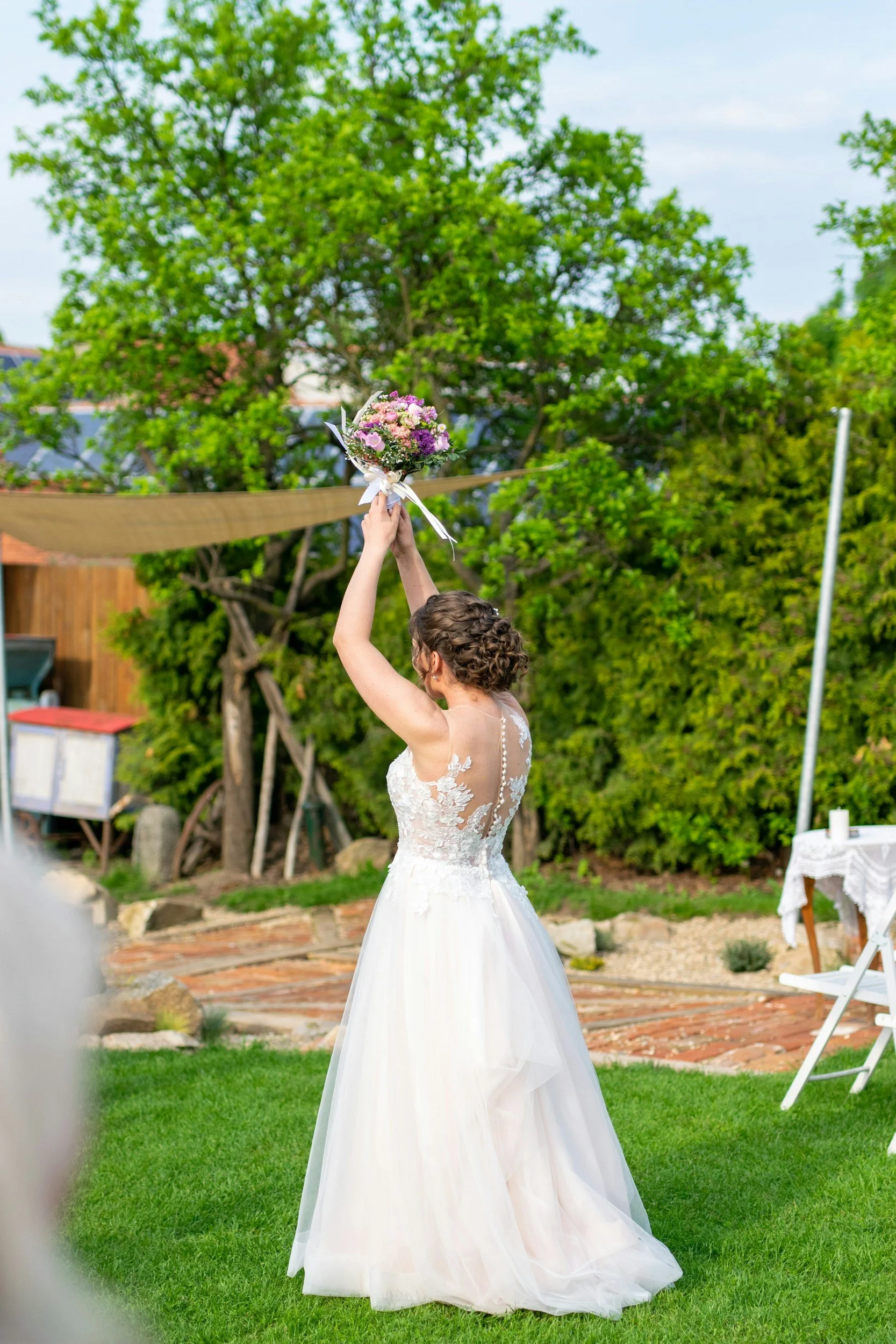
Originally, brides carried herbs and flowers to ward off evil spirits and bad luck. Over time, bouquets became more decorative and symbolic.
The bouquet toss stems from medieval Europe, where guests believed touching the bride would bring good fortune. Throwing the bouquet became a way to escape eager guests.
What it means today
Today, bouquets are often a design feature and personal expression rather than superstition.
Many couples now choose to:
Skip the bouquet toss entirely
Gift the bouquet to a loved one
Dedicate it to parents or grandparents
Repurpose flowers for the reception
No awkward moments required.
The Wedding Cake – Good Fortune and Fertility
Wedding cakes originated from ancient Roman bread-breaking rituals, symbolising fertility and prosperity. Over time, this evolved into stacked cakes and elaborate designs.
The tradition of cutting the cake together symbolises the couple’s first act as a married team.
What it means today
Cake is no longer essential, but the shared moment often still holds meaning.
Modern alternatives include:
Champagne or dessert towers
Dessert tables
Cheese wheels
Tiramisu
Cultural sweets or family recipes
It is less about the cake itself and more about creating a shared moment!
Something Old, Something New, Something Borrowed, Something Blue
This rhyme dates back to Victorian England and was believed to bring good luck to the bride.
Something old – continuity with the past
Something new – hope for the future
Something borrowed – happiness borrowed from another
Something blue – purity, fidelity, and love
What it means today
This tradition has endured because it is flexible and sentimental. Many couples enjoy incorporating it quietly, without pressure. Many couples choose to have their loved ones or bridal party incorporate colour as their ‘something blue!’
It can be deeply personal or playfully symbolic – or skipped entirely.
Do You Have to Follow Wedding Traditions?
The short answer is no.
The most meaningful weddings are not the ones that follow every tradition perfectly. They are the ones that feel intentional, relaxed, and true to the couple.
Many of my clients worry about disappointing family or doing things “wrong”. This is where expert guidance can make all the difference. A thoughtful wedding plan balances:
Respect for family dynamics
Personal values and comfort
A clear vision for the day
Seamless logistics so nothing feels forced
Traditions should enhance your wedding, not dictate it. Plus - having a planner or coordinator means I’m happy for you to blame me if relatives don’t like that you’ve chosen to forgo a tradition!
Choosing Meaning Over Obligation
Understanding where wedding traditions come from empowers you to choose consciously. You can honour tradition, reinterpret it, or let it go altogether.
Your wedding is not a performance. It is a celebration of your relationship, your story, and the life you are building together.
If you are planning a wedding in Brisbane or South East Queensland and want expert guidance to create a day that feels both meaningful and effortless, I would love to support you.
Thoughtful planning, intentional design, and calm, expert coordination can transform wedding traditions from pressure points into beautiful moments that feel entirely your own.
I’d love to chat about which traditions you’d like in your big day!